CIRCUIT GUIDE: Everything you need to know about Circuit Zandvoort
Get up to speed with all the key Circuit Zandvoort statistics, driving pointers, facts and more.
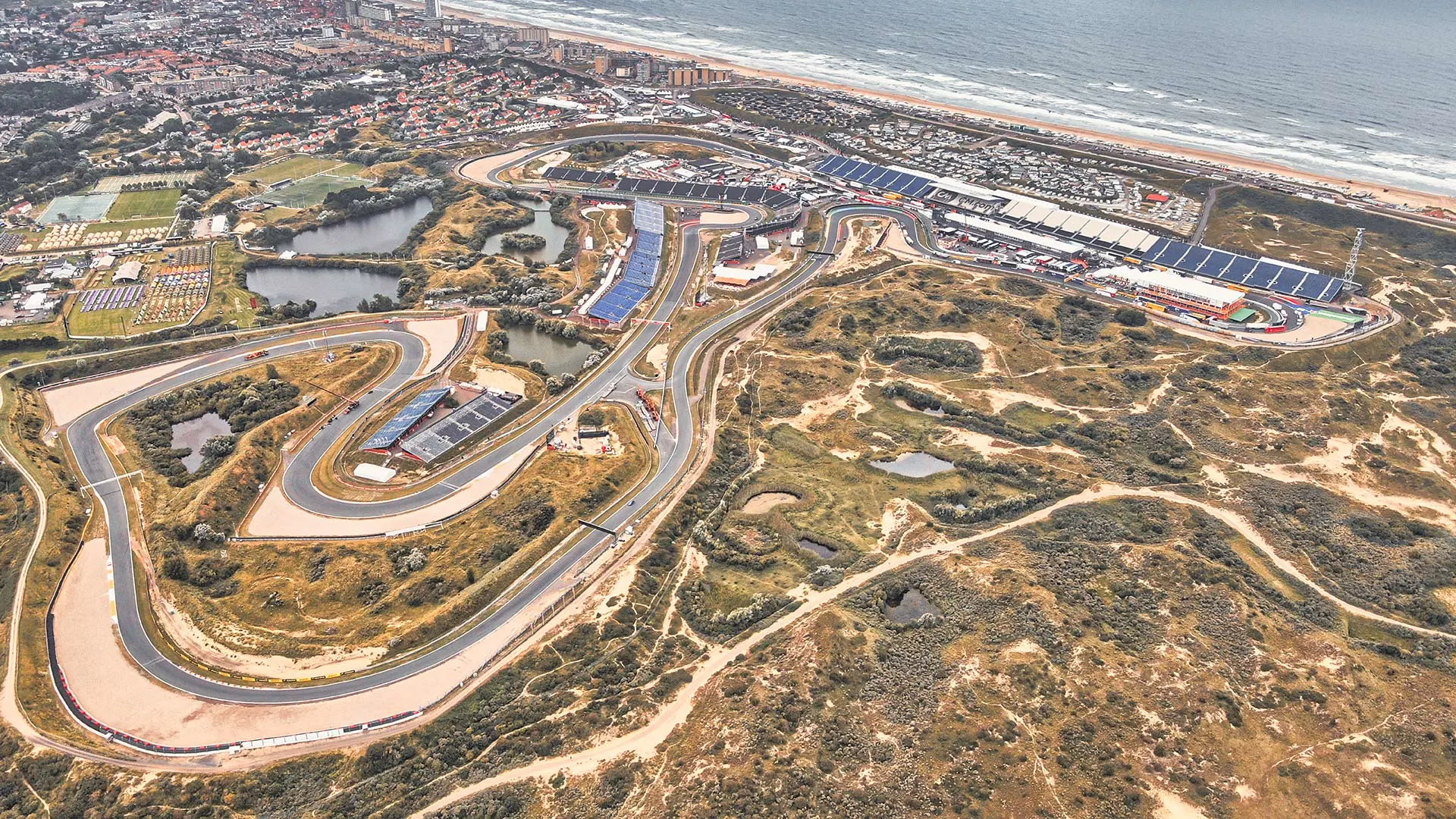
After a well-earned summer break for drivers and teams, Formula 1 returns to action this weekend with the Dutch Grand Prix. But how much do you know about the Circuit Zandvoort? F1.com presents your all-in-one guide…
Key Circuit Zandvoort statistics
- Circuit length: 4.259km
- Number of turns: 14
- Number of laps: 72
- Race distance: 306.587km
- Lap record: 1m 11.097s – Lewis Hamilton (2021)
When was the Netherlands’ first Grand Prix?
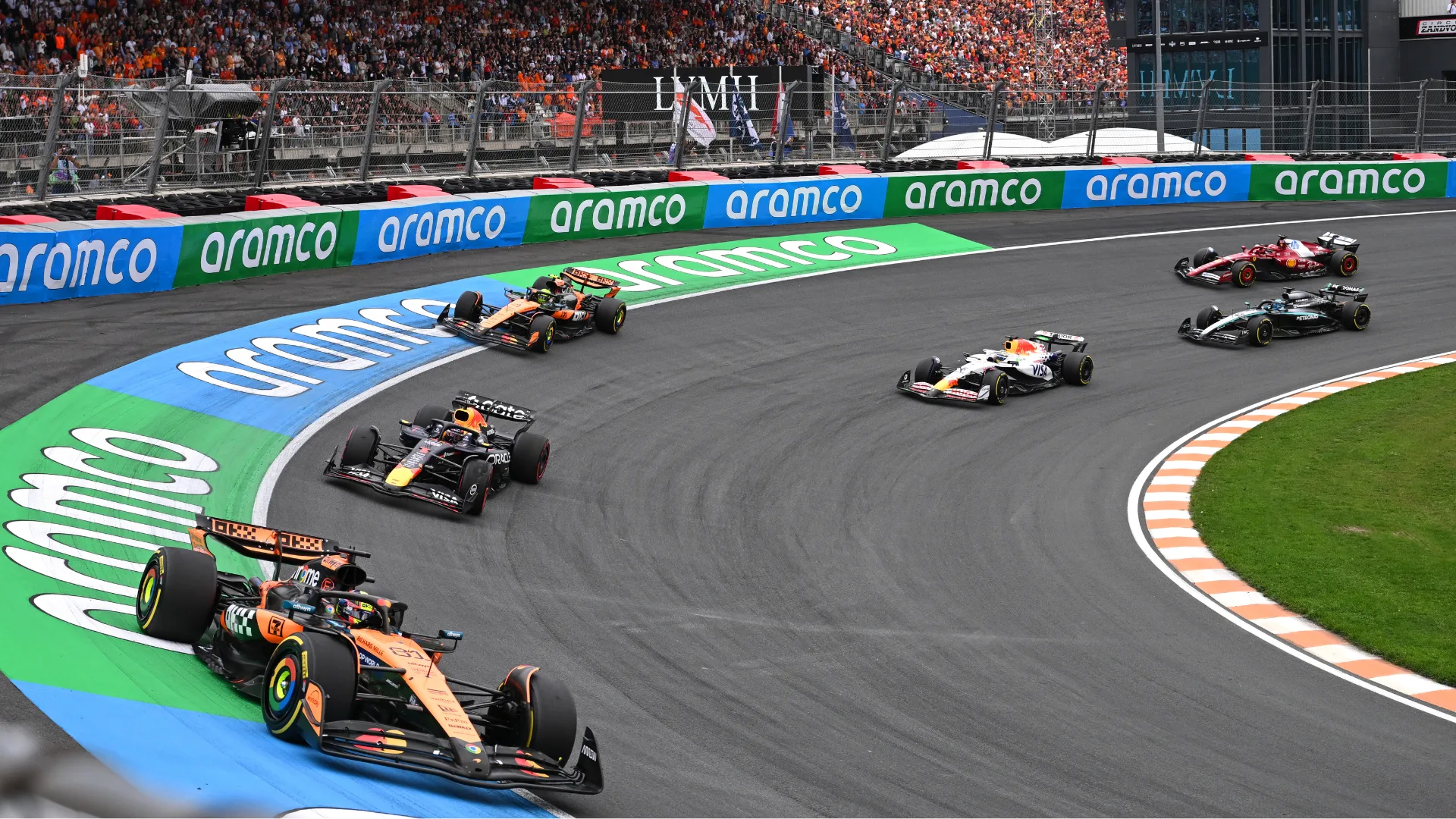
Like Silverstone, Zandvoort was first opened in 1948, part of the wave of post-war motorsport enthusiasm that swept across Europe.
Originally made up of a mixture of permanent track and public roads that snaked through the sand dunes of the Zandvoort resort town, the Dutch Automobile Racing Club – who initiated the plans for the circuit – brought in 1927 Le Mans winner Sammy Davis to consult on the layout for the original 4.2km track.
The F1 World Championship arrived in 1952, with Alberto Ascari dominating the race as he led home a 1-2-3 for Ferrari.
F1 would go on to race on and off at the track until 1985. Then, in 2019, the announcement came that the championship would return to Zandvoort for 2020, after a 35-year hiatus. The Covid-19 pandemic meant that became 36 years and a 2021 date.
What’s the circuit like to drive?
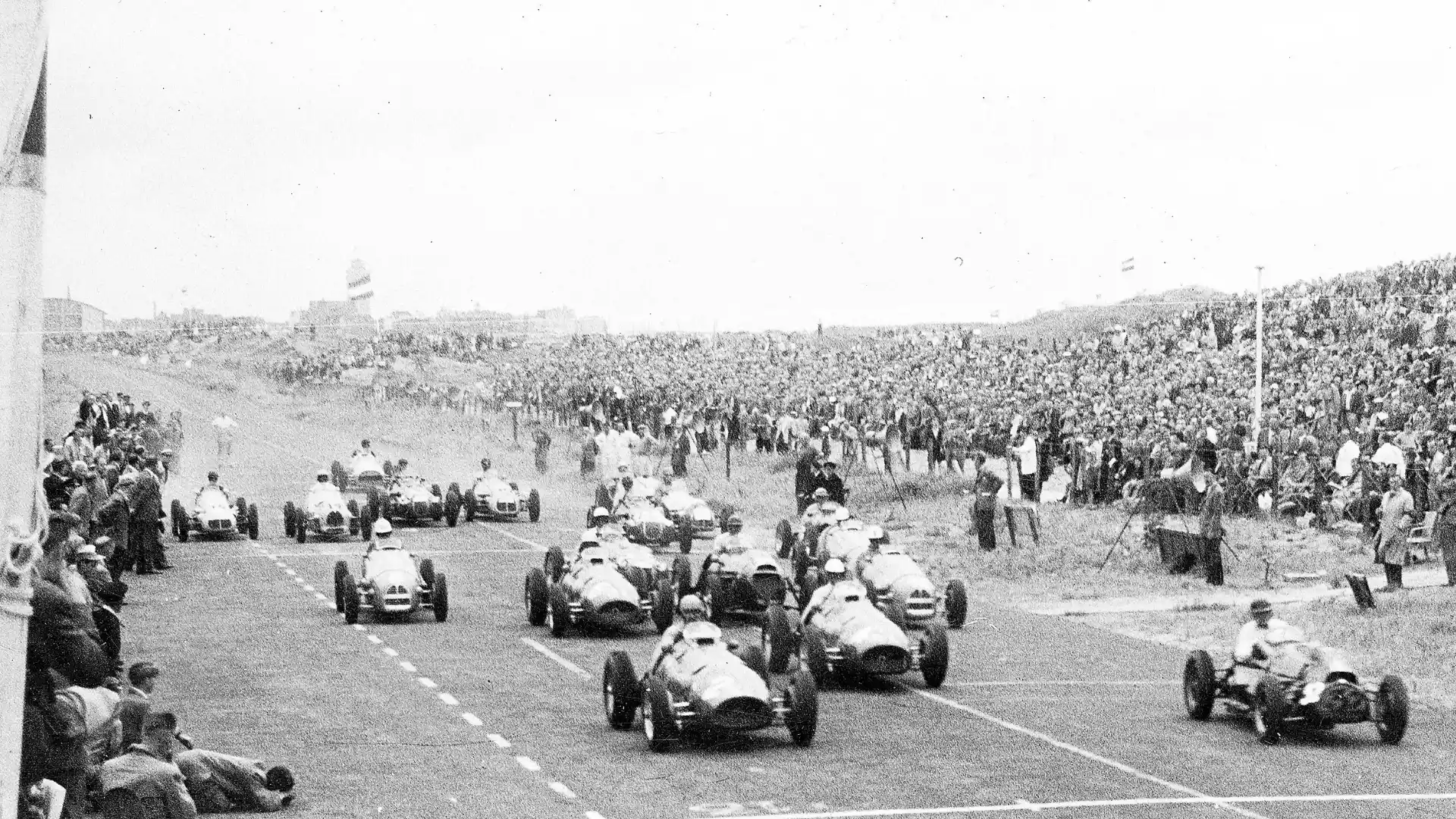
‘Really quick’, ‘pretty insane’, ‘crazy’ and ‘old-school’ were words used by the current crop of F1 drivers when asked to describe the Zandvoort track that many of them tackled in their junior category days.
Zandvoort swoops and flows through the sand dunes, creating a rollercoaster-like feel to the lap, and while the circuit was modernised in time for F1’s most recent return, it remains a proper, challenging drivers’ track.
Former Renault F1 driver Jolyon Palmer explains: “Zandvoort is a lovely circuit that has been adapted really well for modern F1. It’s still difficult to overtake on, as expected with an old design of track, but the banking makes a huge difference.
“You don’t really appreciate the banking until you go around it at Turn 3. The theory is multiple lines, but everyone just bolts for the outside line and tries to get the exit right. And again, coming through the final corner, running the banking.
“It’s a nice, flowing track. You’ve got to have commitment, particularly in the middle sector, which is undulating, and you’ve got to have it hooked up in the high-speed sections. You don’t want to be having random snaps of oversteer, because it’s a punishing circuit as well...”
Zandvoort is a lovely circuit that has been adapted really well for modern F1.
Where are the Straight Mode zones and overtake detection?
As a reminder, and as explained in our pre-season summary of regulation changes, Straight Mode is a different aerodynamic configuration that allows cars to reduce their drag, making them more efficient when accelerating up towards top speed.
The rear wing continues to open up a gap – just like it did when drivers used DRS (the Drag Reduction System) in the past – but now the front wing also moves. The uppermost front wing elements drop down at the same time the rear wing’s top element does.
This is a mode that is used on every single lap in dry conditions, in every area that is designated for it. Essentially, the car will adapt between two different configurations depending on where it is on the track, providing maximum downforce in corners but then less drag on straights.
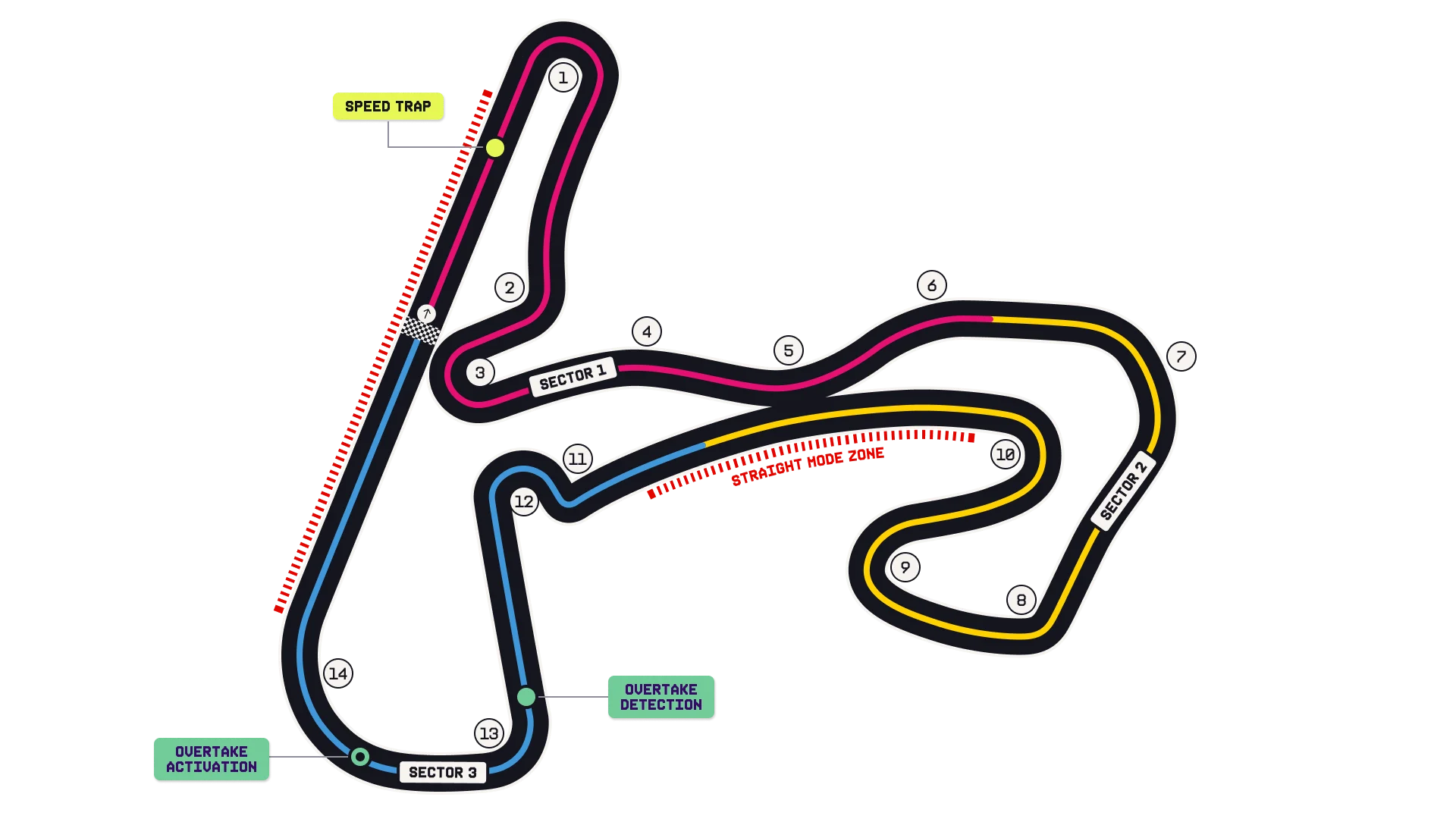
At Zandvoort, there are two designated Straight Mode zones: a run along the start/finish straight, and another between Turns 10 and 11.
Meanwhile, Overtake Mode replaces DRS and is a new power mode that allows a driver to recharge more electrical energy, and generate an additional electrical power profile, so they can sustain a higher speed for a longer period.
There is one detection point per lap for this mode – expected to be out of the final corner on many occasions, leading onto a long straight – and it will be available to drivers on the following lap as long as they stay within a second of the car in front at that detection point.
The Overtake Detection marker here comes just before the entry to Turn 13, while the Overtake Activation line follows between Turns 13 and 14, heading onto the start/finish straight.
Five fun facts about the Dutch Grand Prix
- Zandvoort’s final corner – named after Dutch motorsport legend Arie Luyendyk – features 18-degrees of banking, almost double the numbers seen at the Indianapolis Motor Speedway
- Zandvoort is the only venue to hold the Dutch Grand Prix since 1952
- This weekend marks the first F1 Sprint at Zandvoort
- Jim Clark has won the most Dutch Grands Prix as a driver with four victories
- Ferrari have won the most Dutch Grands Prix as a team with eight victories
Next Up
Related Articles
 Verstappen reacts to ‘incredible’ first pole of season
 Who gained and lost the most places at the start in Sepang?
 What the teams said – Race day in Malaysia
  Hamilton on how Ferrari ‘hit the sweet spot’ in Malaysia
/GettyImages-2298357938.webp) Norris admits McLaren ‘a long way off the pace’ in Malaysia
Norris admits McLaren ‘a long way off the pace’ in Malaysia/GettyImages-2298168619.webp) How Aston Martin 'miracle' earned P12 and P14 for Bahrain GP
How Aston Martin 'miracle' earned P12 and P14 for Bahrain GP