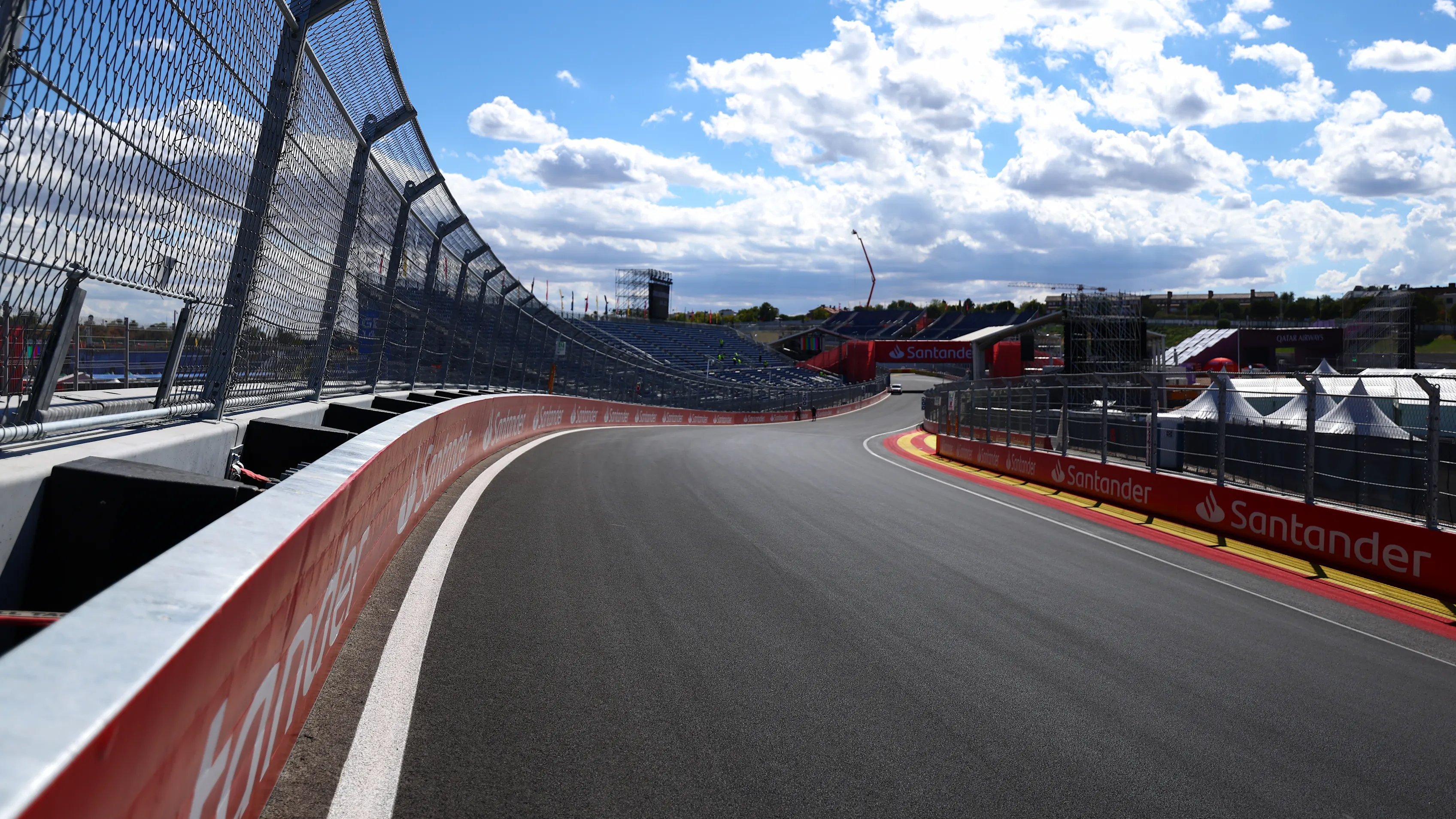
The 2026 season continues this weekend with the Spanish Grand Prix, with the Madring making its debut. But how much do you know about the new circuit? F1.com presents your all-in-one guide…
Key Madring statistics
- Circuit length: 5.416km
- Number of turns: 22
- Number of laps: 57
- Race distance: 308.524km
- Lap record: N/A
/16x9%20single%20image%20-%202026-09-09T161943.864.webp)
When was Madrid's first Grand Prix?
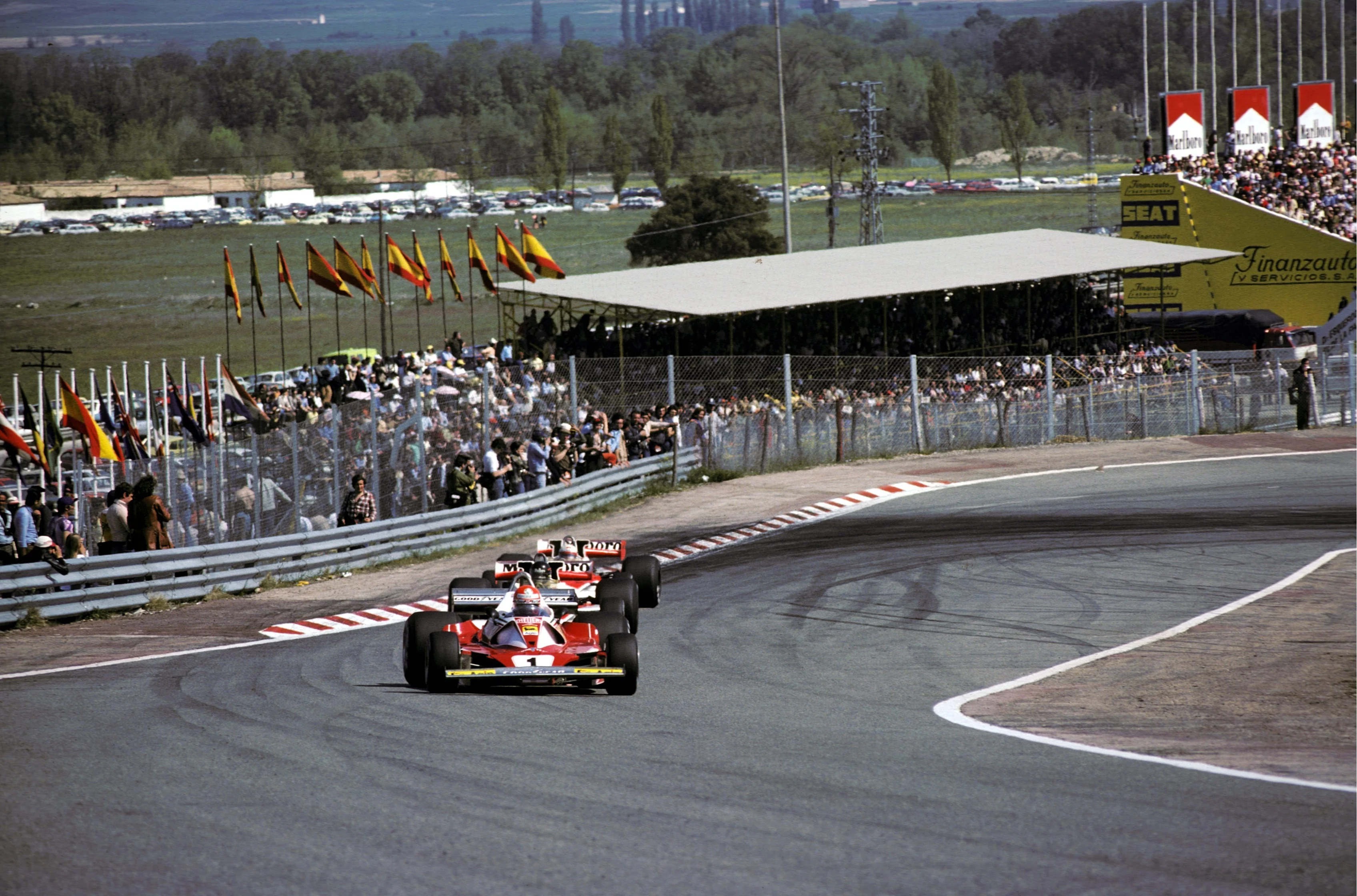
This weekend marks the first time F1 has raced at the Madring, but the Spanish capital is no stranger to the sport, having first held the Spanish Grand Prix in 1968 at Jarama.
Located 30km north of the city – significantly further out than the new venue – Jarama was added to the calendar in rotation with Barcelona's Montjuic Circuit as part of a concerted effort by the country to establish itself on the international racing stage.
A tragic accident at Montjuic resulted in Madrid becoming the permanent host between 1976 and 1979, and once more in 1981, with winners including James Hunt and Mario Andretti.
The event didn't take place for a number of years due to a lack of interest and unpleasant weather conditions and, by the time it returned, Jerez and Barcelona were selected as preferable locations.
What's the circuit like to drive?
The short answer is that none of the drivers will know for sure until Free Practice 1 gets underway on Friday, September 11, although the layout and useful test that Formula 3 completed give us some indication.
First up is the short run of about 200m down to Turn 1, before a right-hander launches the drivers around the third corner, leading onto the longest straight on the circuit. The speed picks up massively until they arrive at a heavy braking zone, followed by an elevation change and blind apex at Turn 8.
The street section comes to an end and switches to the permanent track, where a chicane paves the way for La Monumental – an ambitious and exhilarating banked curve with a 24% gradient. Thousands of fans will roar drivers around here, with multiple racing lines on offer to encourage a myriad of moves.
Another flat-out series of turns comes next, but then precision will be critical as the walls begin to close in and the track enters a twisty and technical section, culminating in the final tight corner back onto the start/finish straight.
Where are the Straight Mode zones and overtake detection?
As a reminder, and as explained in our pre-season summary of regulation changes, Straight Mode is a different aerodynamic configuration that allows cars to reduce their drag, making them more efficient when accelerating up towards top speed.
The rear wing continues to open up a gap – just like it did when drivers used DRS (the Drag Reduction System) in the past – but now the front wing also moves. The uppermost front wing elements drop down at the same time the rear wing’s top element does.
This is a mode that is used on every single lap in dry conditions, in every area that is designated for it. Essentially, the car will adapt between two different configurations depending on where it is on the track, providing maximum downforce in corners but then less drag on straights.
At the Madring, there are just two designated Straight Mode zones: a run along the start/finish straight, followed by the section between Turns 3 and 4.
Meanwhile, Overtake Mode replaces DRS and is a new power mode that allows a driver to recharge more electrical energy, and generate an additional electrical power profile, so they can sustain a higher speed for a longer period.
There is one detection point per lap for this mode – expected to be out of the final corner on many occasions, leading onto a long straight – and it will be available to drivers on the following lap as long as they stay within a second of the car in front at that detection point.
The Overtake Detection marker here comes just before the entry to Turn 22, while the Overtake Activation line follows on the exit of that corner, heading onto the start/finish straight.
/Madring%20Circuit%20Map.webp)
Five fun facts about the Spanish Grand Prix
- The circuit combines public roads with purpose-built sections around IFEMA Madrid and Valdebebas, making it a hybrid venue
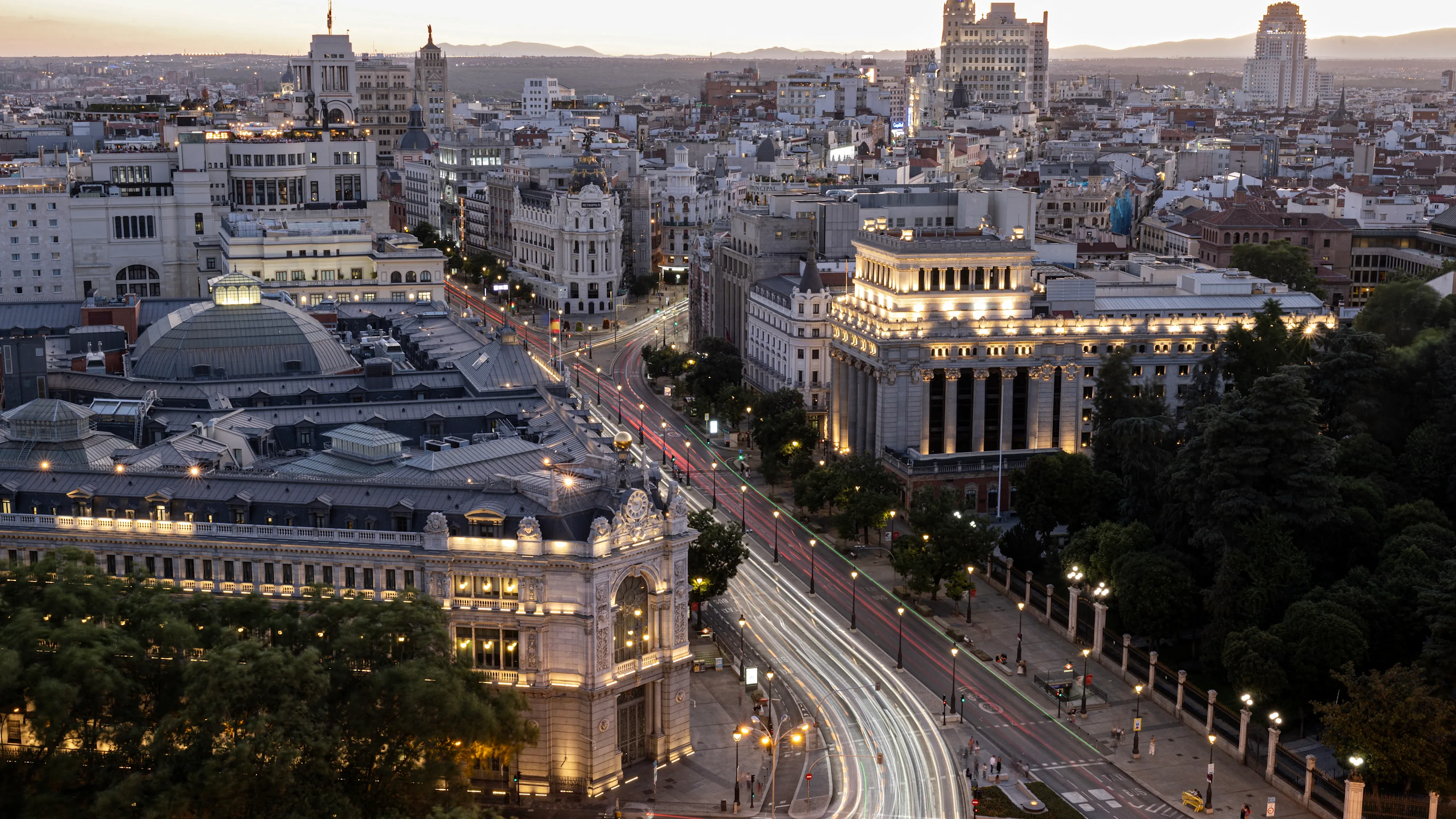
- Madrid-born Carlos Sainz will experience his first true home race, with the Spaniard taking on the role of circuit ambassador
- The cars are expected to reach a top speed of 340kph
- Around 45,000 spectators will watch drivers at La Monumental, which is 550m long and features banking with a gradient of up to 24%
- The Madring is the first track to debut on the F1 calendar since Las Vegas was added in 2023
Next Up
Related Articles
 The biggest recovery drives to win in F1
/16x9%20single%20image%20-%202026-09-10T135227.105.webp) LiveLIVE COVERAGE: All the build-up ahead of the Spanish GP
LiveLIVE COVERAGE: All the build-up ahead of the Spanish GP.webp) How Antonelli ‘closed the circle’ at Monza
How Antonelli ‘closed the circle’ at Monza UnlockedWhy Antonelli’s Monza win feels like the defining moment of 2026
 De la Rosa on how Aston Martin’s risky upgrades paid off
/EXCLUSIVEINTERVIEWADHOC%20FEATURE%20V4%20DISPLAY%20(10).webp) ExclusiveSainz on bringing F1 back to his home city of Madrid
ExclusiveSainz on bringing F1 back to his home city of Madrid