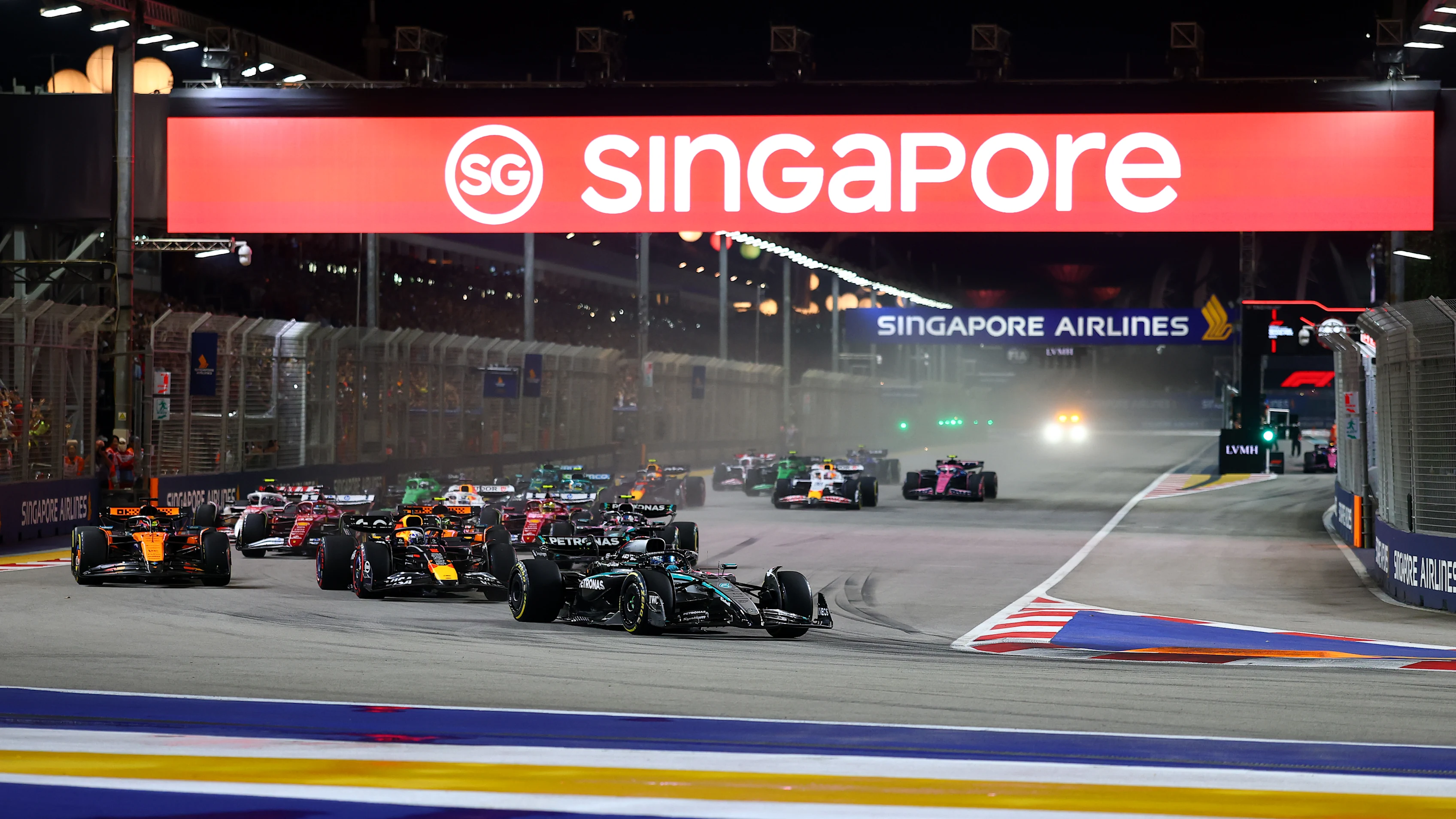
The 2026 Formula 1 season continues this weekend, with Singapore playing host to the final Sprint of the year. But how much do you know about the Marina Bay Street Circuit? F1.com has your all-in-one guide…
Key Marina Bay Street Circuit statistics
- Circuit length: 4.927km
- Number of turns: 19
- Number of laps: 62
- Race distance: 305.337km
- Lap record: 1m 33.808s – Lewis Hamilton (2025)
When was Singapore’s first Grand Prix?
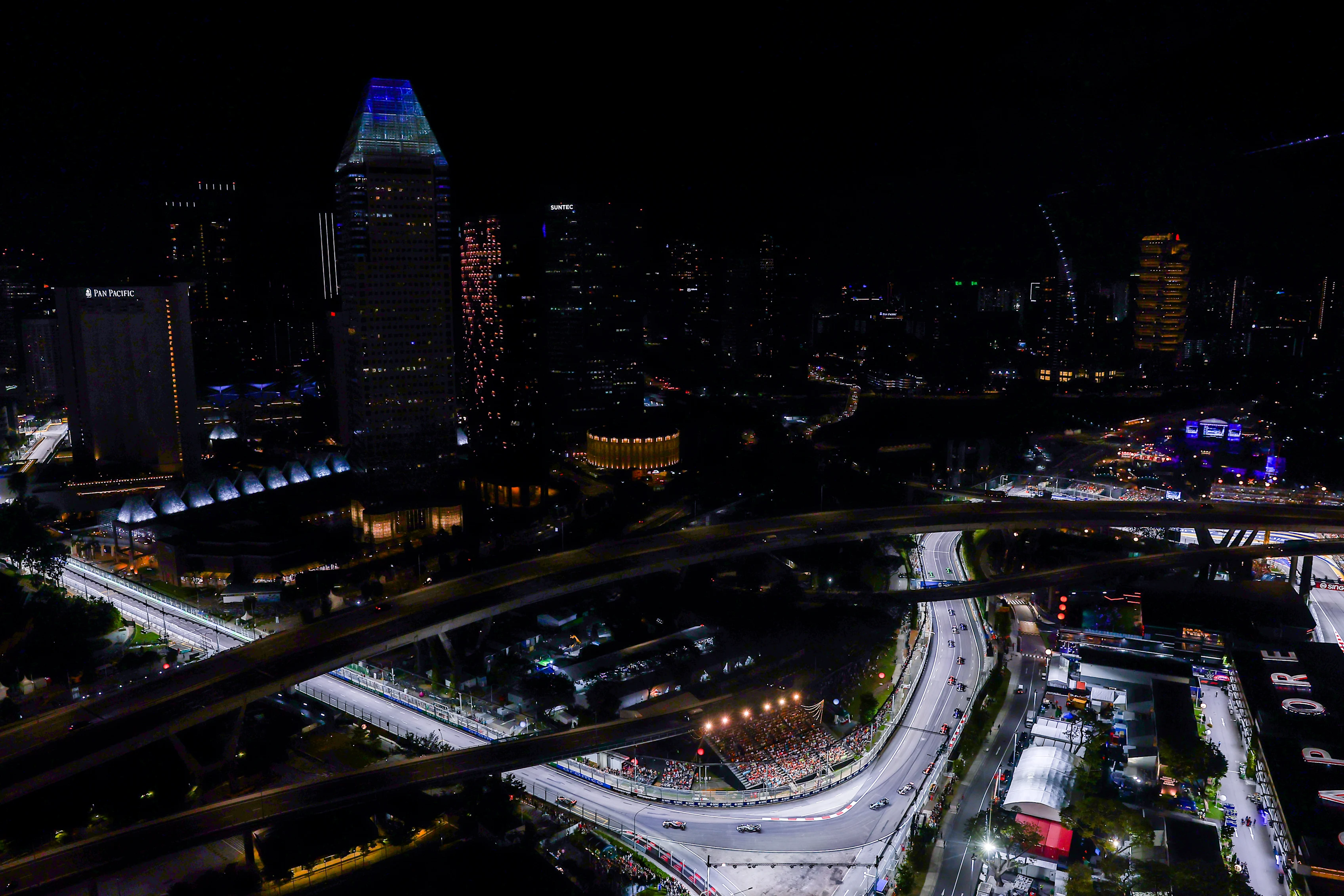
The now-defunct Thomson Road Grand Prix circuit held eight non-championship editions of the Singapore Grand Prix between 1966 and 1973, but the country made its official debut on the F1 calendar in 2008.
An original design by Herman Tilke was modified by engineering company KBR Inc, making use of public roads by the city’s harbour to create an exhilarating night race that remains one of the most physically demanding of the season.
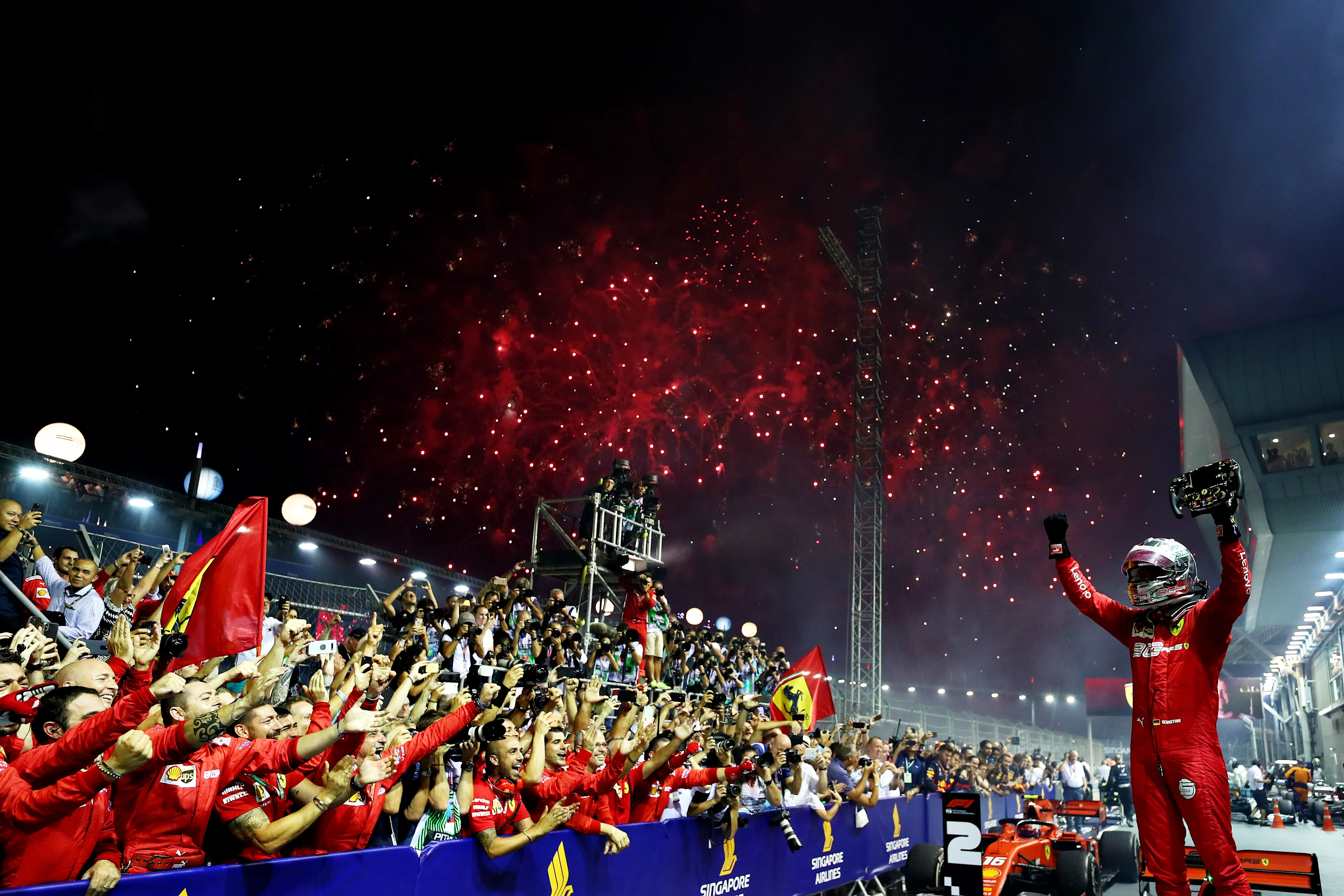
The bumpy surface of the streets, humid conditions and long lap time come together to form a relentless challenge for the drivers, which Sebastian Vettel mastered with five victories – just one more than Hamilton as it stands.
What’s the circuit like to drive?
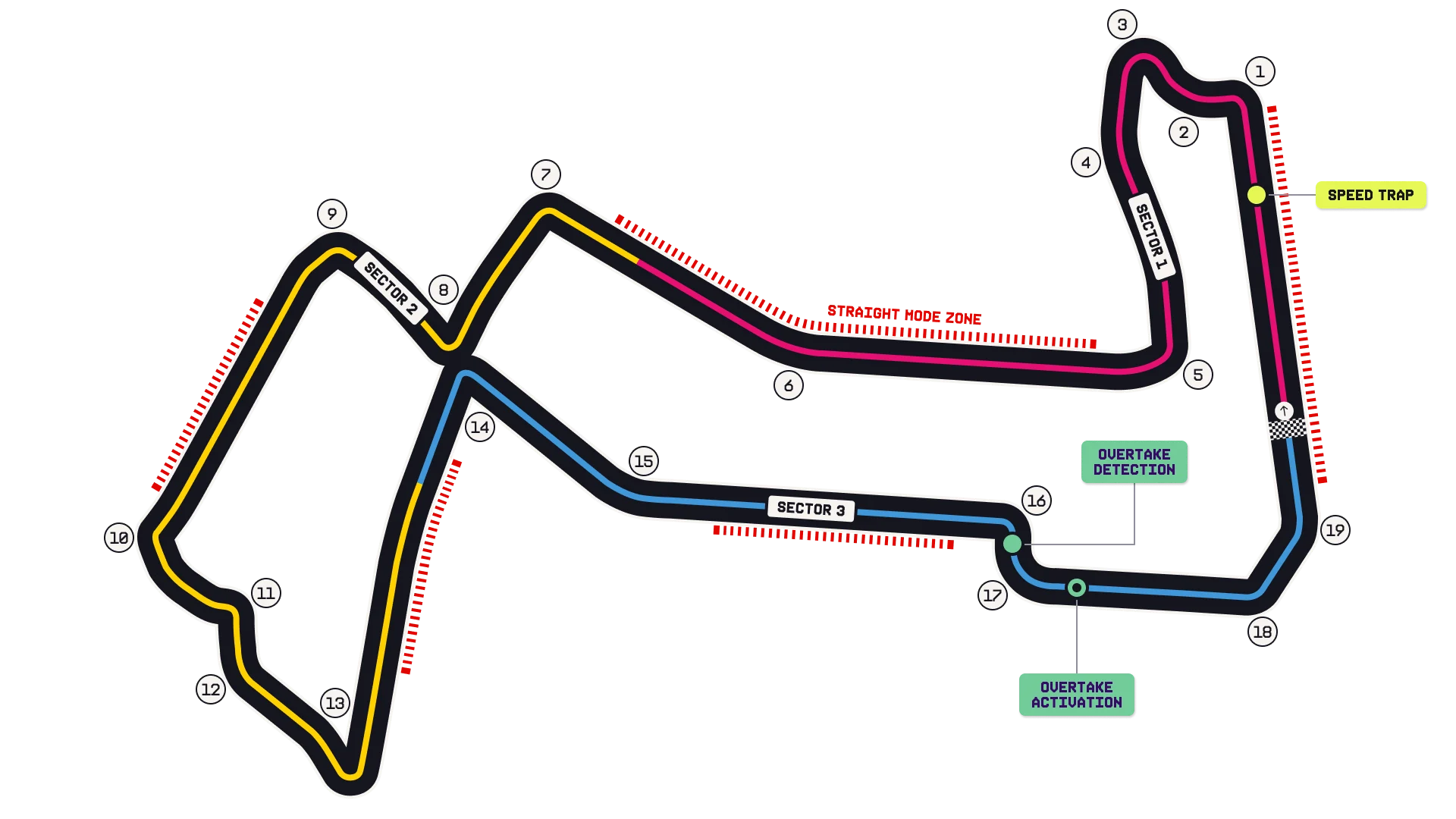
Marina Bay was altered ahead of the 2023 race to cut the number of corners down from 23 to 19, but it’s still a twisty, tight circuit that requires stamina and maximum focus for the entirety of the lap.
Short run-off areas and close walls mean that the smallest of mistakes are punished – every Singapore Grand Prix featured at least one Safety Car appearance until 2024, when Lando Norris managed to win even after grazing the wall on multiple occasions.
So, just how hard is it to complete a clean lap? Jolyon Palmer, former Renault F1 driver, explained: “Marina Bay is a long, complex circuit, and draining as well – a little bit like Monaco – with plenty of bumps. It’s all about the low-speed and having decent turn-in without losing the rear or suffering snaps of oversteer.
“There are still 19 corners after the removal of the Turns 16-19 section, which has become a long straight, and towards the end of the lap you’re starting to worry about your rear tyres overheating, particularly if you’ve not been kind to them earlier on.
“Braking is particularly tricky at Turn 7, where it’s easy to run wide. The newer Singapore Sling through Turns 10 and 11 is also one of those ones that can lure you into going too deep, often catching drivers out.
“Coming over the bridge, where you brake to the right and then turn to the left, induces lock-ups, while a lot of traction events mean you’re spiking rear tyre temperatures – and there’s an emphasis on rear grip here.
“A huge amount of concentration is required for this circuit and Grand Prix. You can lose a few kilos of liquid during the race, so hydration is the order of the day. Monaco might be the only venue with a slower average speed, but Singapore can be an absolute slog.”
Marina Bay is a long, complex circuit, and draining as well – a little bit like Monaco.
Where are the Straight Mode zones and overtake detection?
As a reminder, and as explained in our pre-season summary of regulation changes, Straight Mode is a different aerodynamic configuration that allows cars to reduce their drag, making them more efficient when accelerating up towards top speed.
The rear wing continues to open up a gap – just like it did when drivers used DRS (the Drag Reduction System) in the past – but now the front wing also moves. The uppermost front wing elements drop down at the same time the rear wing’s top element does.
This is a mode that is used on every single lap in dry conditions, in every area that is designated for it. Essentially, the car will adapt between two different configurations depending on where it is on the track, providing maximum downforce in corners but then less drag on straights.
In Singapore, there are five designated Straight Mode zones, commencing with a run along the start/finish straight, then between Turns 5 and 7, and another between Turns 9 and 10. The fourth follows between Turns 13 and 14, before concluding with a final one from Turn 15 to 16.
Meanwhile, Overtake Mode replaces DRS and is a new power mode that allows a driver to recharge more electrical energy, and generate an additional electrical power profile, so they can sustain a higher speed for a longer period.
There is one detection point per lap for this mode – expected to be out of the final corner on many occasions, leading onto a long straight – and it will be available to drivers on the following lap as long as they stay within a second of the car in front at that detection point.
Around the Marina Bay Street Circuit, the Overtake Detection point comes as drivers head out of Turn 16, while the Overtake Activation line follows at the exit of Turn 17.
Five fun facts about the Singapore Grand Prix
- Due to the physical demands of the climate and circuit, drivers can lose as much as 3kg in body weight over the course of a race in Singapore
- The Marina Bay Street Circuit hosted F1's first-ever night race
- Teams and drivers often try to operate on European time to avoid jet lag and stay alert for the late sessions, meaning they have breakfast in the early afternoon and don’t go to bed until the early hours of the morning
- This season will see Singapore hold a Sprint for the first time, which is set to last 21 laps
- Ferrari and Mercedes share the record for the most wins in Singapore, with five apiece
Next Up
Related Articles
 Vowles reveals how he told drivers about Williams problems
 Who impressed our judges at the Bahrain GP in Malaysia?
 BettingSingapore Grand Prix betting guide and latest odds
 Lindblad's P10 finish 'more than we could have imagined'
/GettyImages-2297999489.webp) How Alonso and Aston Martin took their opportunity in Sepang
How Alonso and Aston Martin took their opportunity in Sepang FIA Formula 2 and FIA Formula 3 announce 2027 calendars