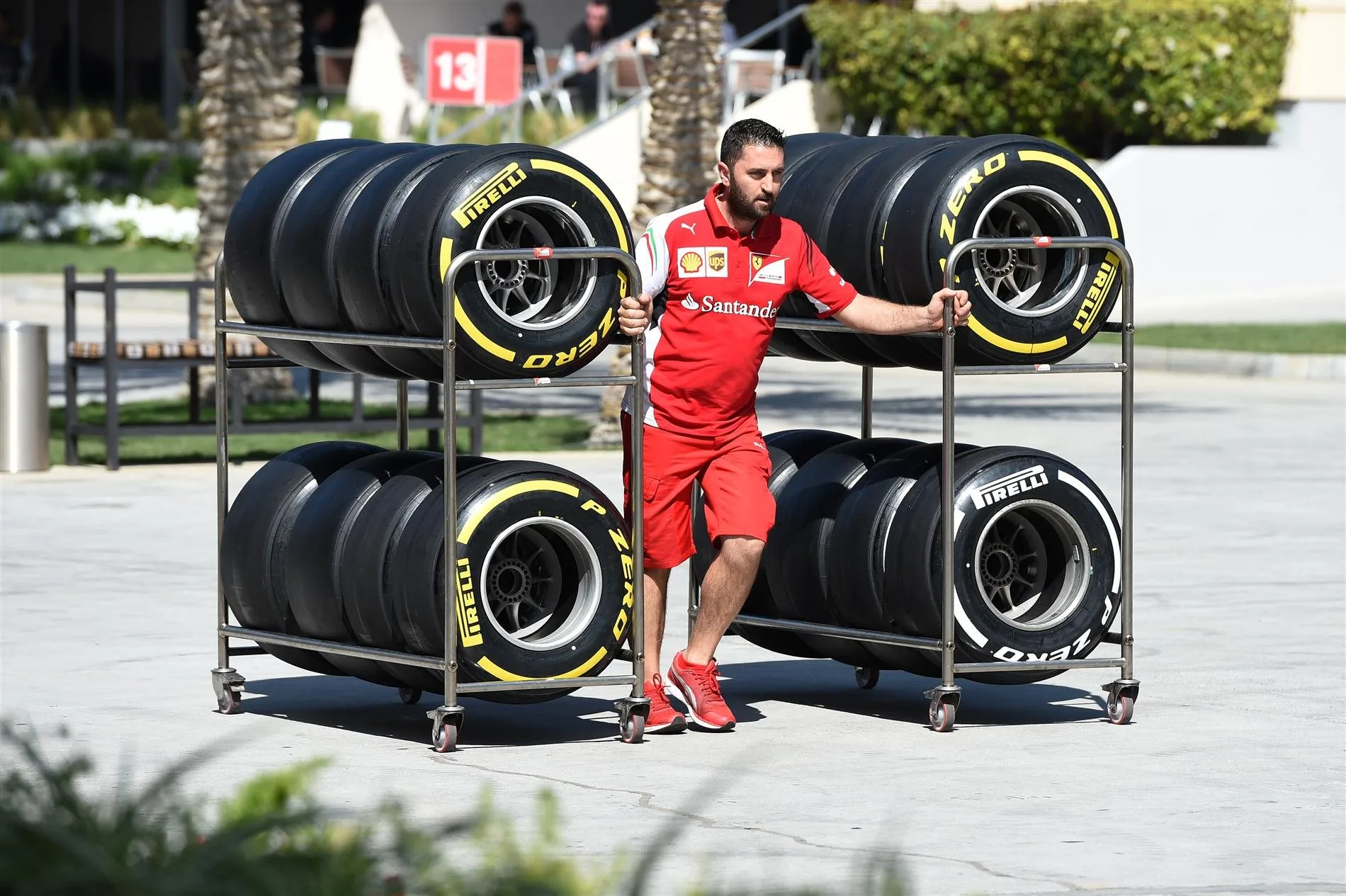
This week’s Bahrain test allowed Pirelli to begin to get a better picture of how their latest tyres interact with the radically different new cars. A number of teams were able to complete race simulations, as well as qualifying and pit stop practice, assessing every aspect of tyre usage.
On top of that, the weather remained dry and warm, in the region of 20 degrees Celsius or higher: temperatures much more representative of the season as a whole compared to those experienced at the opening 2014 test in Spain.
“The teams were able to learn more about tyres over the four days in Bahrain than they could in Jerez two weeks ago, thanks to increased running time and optimal weather conditions,” commented Paul Hembery, Pirelli motorsport director.
“Although the teams are still at a comparatively early point on the development curve with their new cars, testing data so far indicates that the 2014 tyres are more consistent and durable than their predecessors. As a result, we are also seeing fewer ‘marbles’ on the circuit: one of our objectives at the start of this season.”
The performance differences in Bahrain between tyre compounds were approximately as follows: the supersoft around 0.7s per lap faster than the soft; the soft around 1.2s per lap quicker than the medium; and the medium is around 1.3s per lap quicker than the hard.
“Teams are likely to improve their performance and understanding of the car-tyre package still further in the test to come, which means that the lap time differences we have been seeing between the compounds are likely to come down,” added Hembery, “especially when the teams discover more downforce as the season goes on.”
Next Up
Related Articles
 Norris ‘shocked’ by pole position in Madrid
 Stroll gets grid penalty for Spanish Grand Prix
 Theophile Nael wins first-ever F3 Madring race
/GettyImages-2294880857.webp) Norris denies Antonelli pole position for Spanish GP
Norris denies Antonelli pole position for Spanish GP UnlockedWhat are the tyre strategy options for the Spanish Grand Prix?
 BettingSpanish GP Bet Builder picks after Norris takes pole