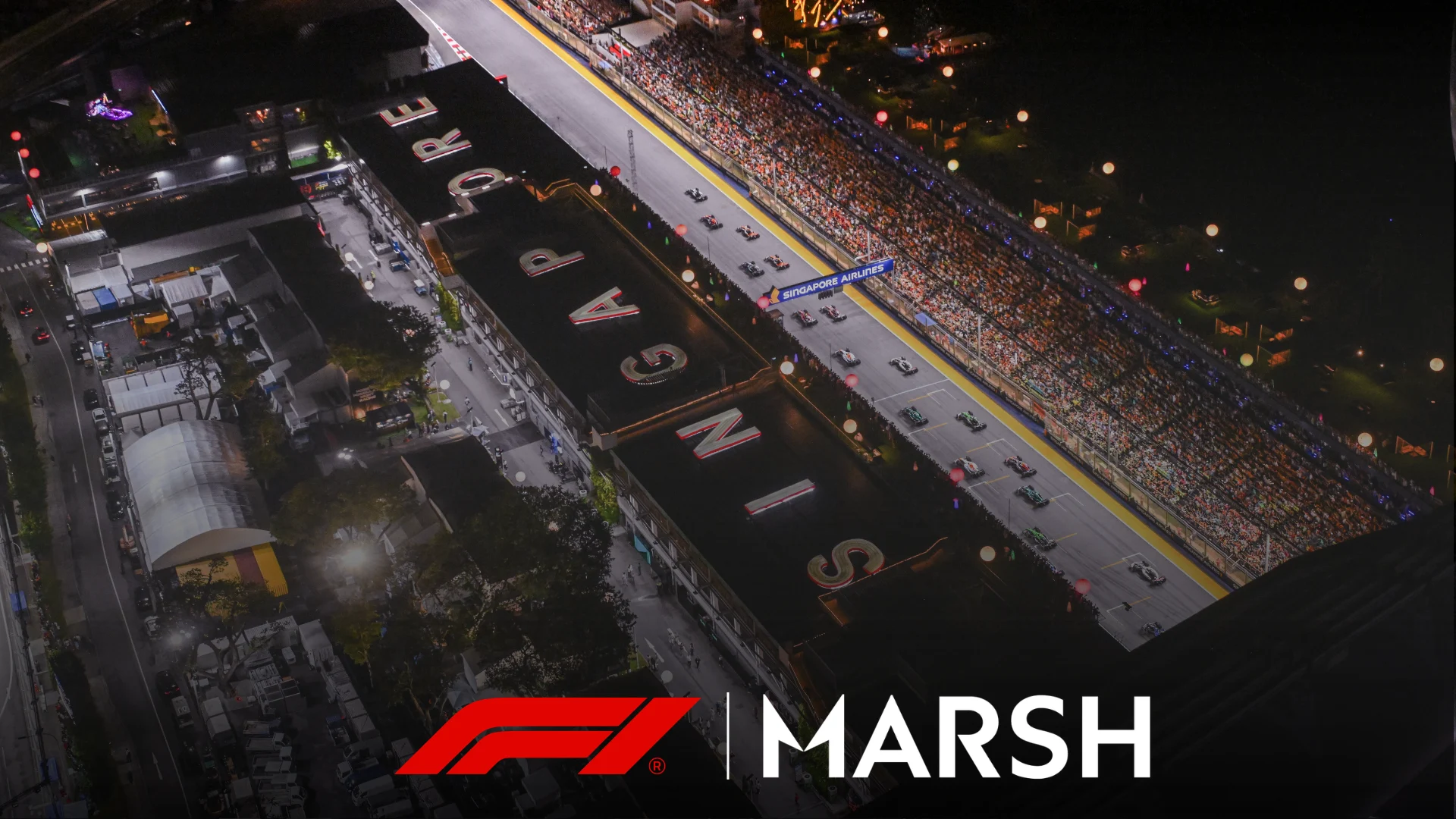
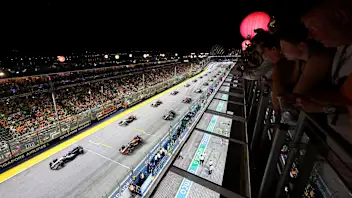
A quirk of geography ensures travellers arriving at Changi Airport, heading to Singapore’s downtown metropolis, pass high over the first corner complex at the Marina Bay Street Circuit.
F1 teams coming to Singapore in 2008 for F1’s first night race expressed some scepticism about the concept – but the first sight of the circuit, lit up like the mothership from Steven Spielberg’s Close Encounters, blew away all doubt.
It looked bewilderingly magnificent and full of promise. And over the next two decades, Singapore has delivered. The cars look fabulous under lights, and the atmosphere cranks up a notch or two when night falls on the Lion City. It’s a brilliant place to race… and teams are prepared to risk plenty in an effort to win here.
So how will the teams, drivers and strategists approach the weekend? It’s time to take a look in The Risk Perspective, in partnership with Marsh, Formula 1's Official Risk Partner and Official Insurance Brokering Partner.
The Engineering Perspective: Dave Greenwood – Racing Director, Alpine
“Everywhere we go this year, the first topic is always energy management – but Singapore is a little less sensitive to that; it’s a less important factor in the weekend as a whole.
“The way the straights and corners are distributed, we actually get a speed profile much more similar to what we’re used to in Singapore, than we do elsewhere. Energy management will tend to look after itself.
“It’s a track for maximum downforce, but that means less this year than it did, with most teams not having various rear wings from which to choose. What you will see in this area is an abundance of extra winglets as everyone tries to add a little bit more downforce, as this always provides a big advantage in Singapore.
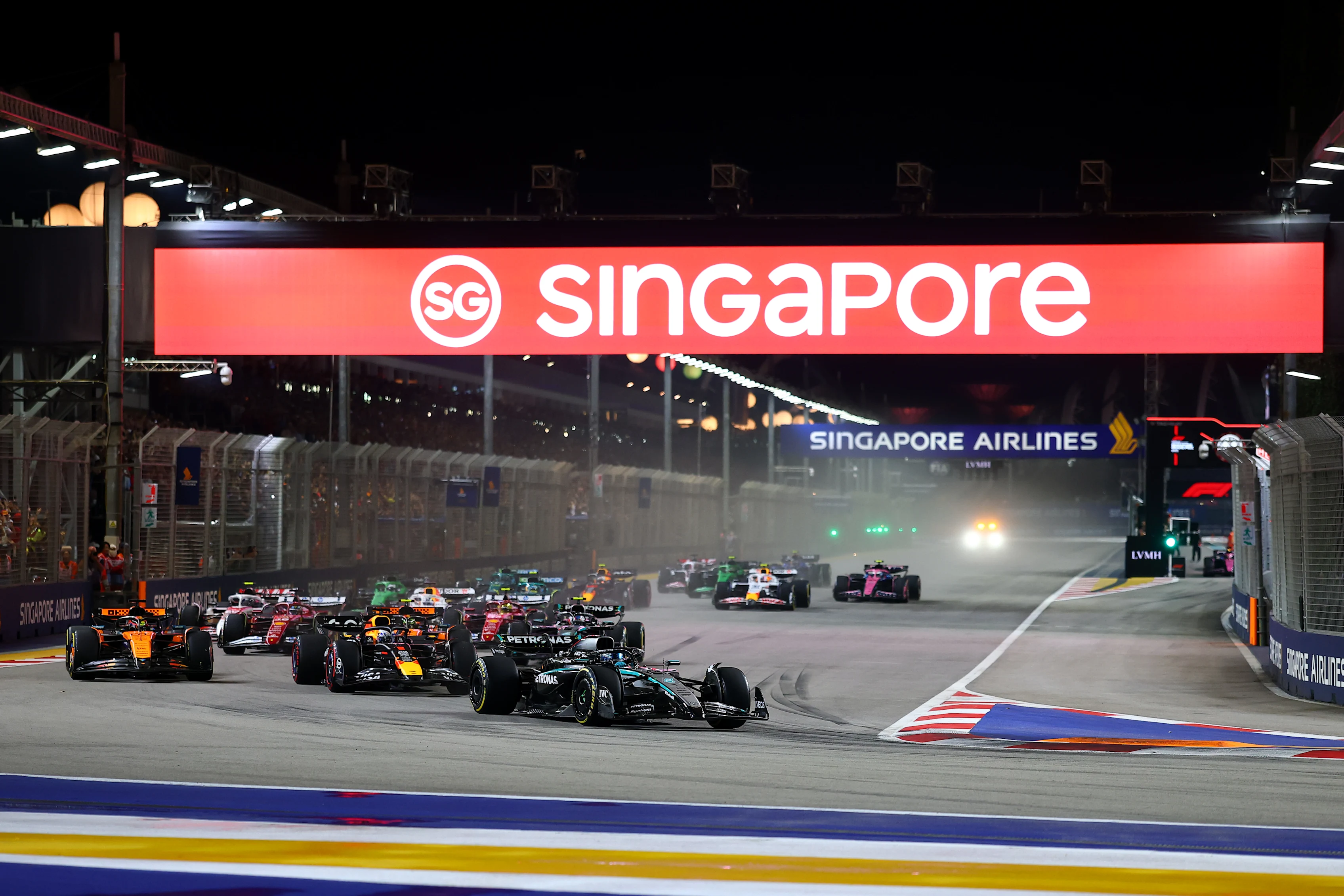
“In terms of mechanical set-up, it’s a massively grip-sensitive circuit, one of the highest of the year. So, generally speaking, the challenge there is to get a car that rides well, takes the kerbs well, and fundamentally has low-speed, mid-corner grip, both front and rear.
“Usually, we would have three practice sessions to fine-tune that – but, of course, this year, we have just one. This is the challenge of the Sprint format: there will be less time to dial-in the car. We have to put a lot more trust in our pre-event work and everything we’ve discovered in the simulator.”
The Key Section: 90° Corners
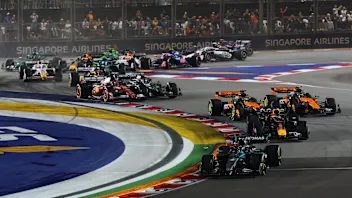
The action zones at Marina Bay have shifted over the years. In the first iteration of the track, the first corner complex, comprising a hard left, easy right and hairpin had been the focus of activity – not least because the pitlane blends out into the middle of it.
But, with the advent of the ground effect cars, and the shortening of the track in 2023, attention turned to the final sector, where the sharp right-handers of T14 and T16 became viable, DRS-assisted overtaking spots.
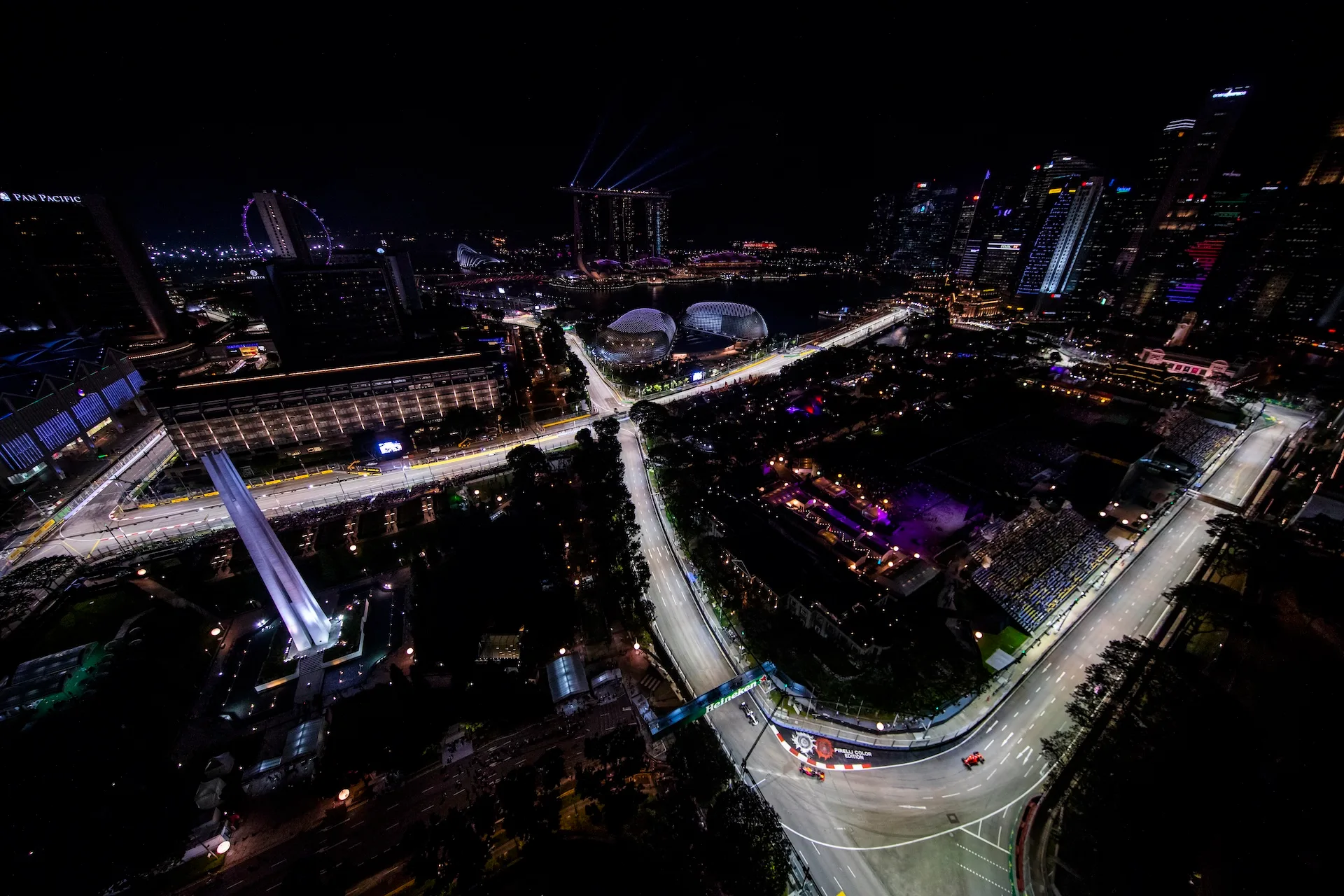
Quite what this year holds is still a matter of educated guesswork, with active aero and the ability to deploy individual energy strategies changing the game again – but what will be important, irrespective of where the overtaking opportunities are, is getting out of the slower corners well.
The map of Marina Bay is dominated by these 90° corners where streets intersect, and the circuit hangs a low-speed left or right. Where these occur before a straight, it’s often how well the drivers get onto that straight that determines the success of attack or defence at the far end.
Some cars are better than others when it comes to maximising low speed performance – but low-speed corners in Singapore are of a different order to low-speed corners on a permanent circuit. Everyone has to get their car set-up correctly to cope.
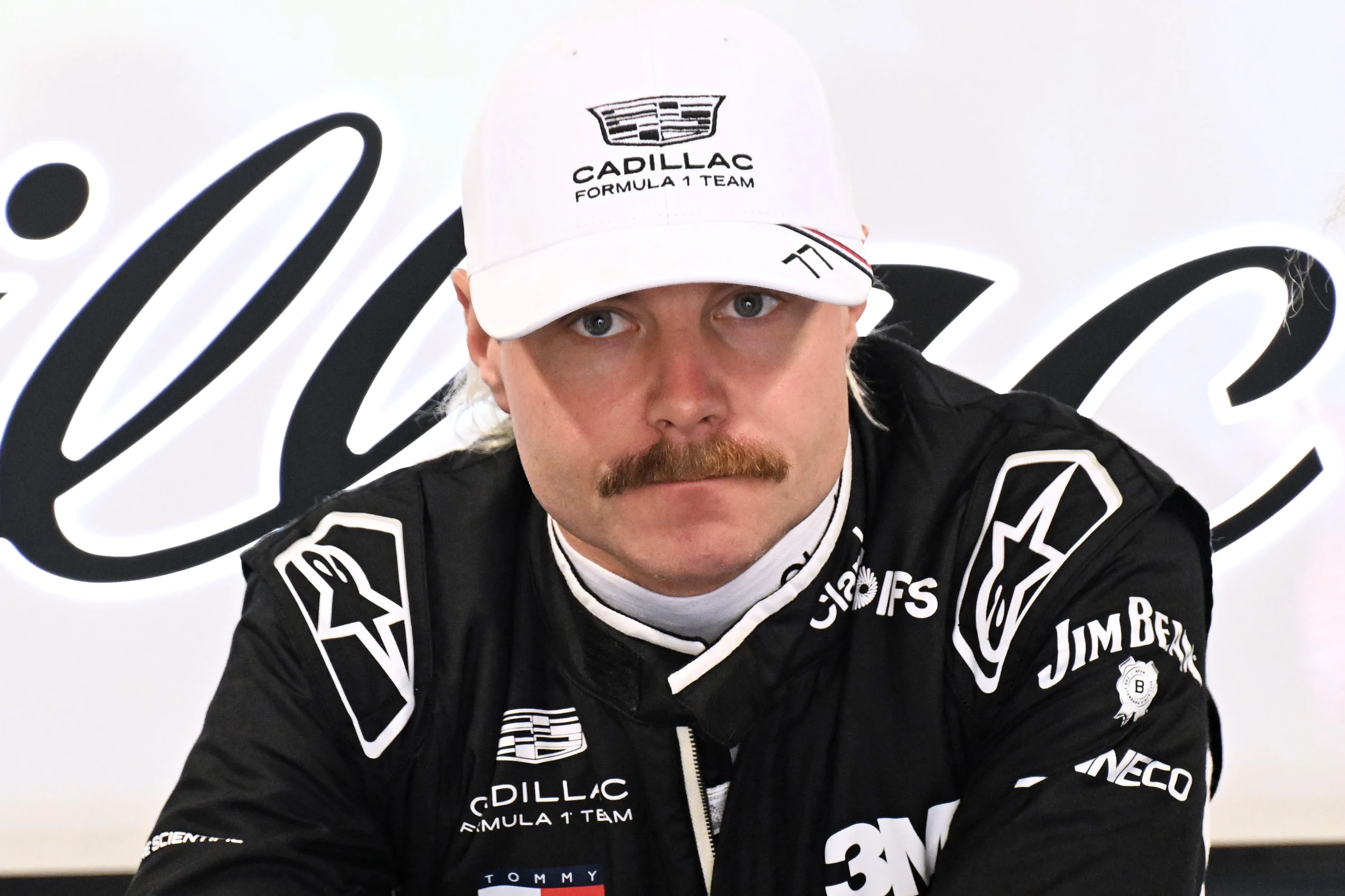
The Drivers’ Perspective: Valtteri Bottas
“Singapore has a couple of straights – but it’s not like Monza. There’s a lot of corners, where you can harvest energy, and this generation of cars have felt nice on the street tracks, so I don’t think there’s going to be any surprises this year, compared to what we’ve seen previously.
“With the cars this year, I do think it will create more overtaking opportunities, it will be more dynamic with the battery. If one car runs out [of energy] early, and another has a full pack, that’s going to make a big difference on the straights.”
The Greatest Race: 2023
Red Bull Racing made marmalade of the opposition in 2023, winning 21 of the 22 races, setting record after record, bestriding the globe like an almost perfect winning machine… but the wheels came off in Singapore.
Max Verstappen qualified 11th, Sergio Pérez 13th, and, after 14 races of contesting the minor places, Ferrari, Mercedes and McLaren were presented with an opportunity to revitalise their season. Carlos Sainz took the victory for Ferrari from pole position… but a grandstand finish had all three teams separated by little more than second at the chequered flag.
It was Mercedes that lit the fuse. The field collectively pitted on Lap 20, when a Safety Car came out after Logan Sargeant tagged a wall and left a trail of debris on his way back to the pit lane.
The field had been relatively tight, which was bad news for Charles Leclerc and Lewis Hamilton who, as the second Ferrari and Mercedes respectively, had to double stack and wait for their pit-box to clear.
It was nearly good news for Max Verstappen. He started the race on a hard tyre, and almost cleared the stopping cars… but Sainz came out ahead, Verstappen was bottled up, and soon fell out of contention. The timing was good for Lando Norris, however, who managed to jump Leclerc, rising to net third.
The advantage of a good tyre delta made itself evident when George Russell, Norris, Hamilton and Leclerc all whistled past Verstappen, on the same hard compound… but 20-laps younger.
Given they had all stopped on the same lap, there wasn’t a tyre delta to play with and thus the race may have ended in stalemate… but a gearbox problem for Esteban Ocon, and a Virtual Safety Car 18 laps from home, set the race alight.
Mercedes went all in for the win, pitting both cars for a new medium. Sainz, Norris and Leclerc stayed out… and the number crunching suggested it would be a close-run thing.
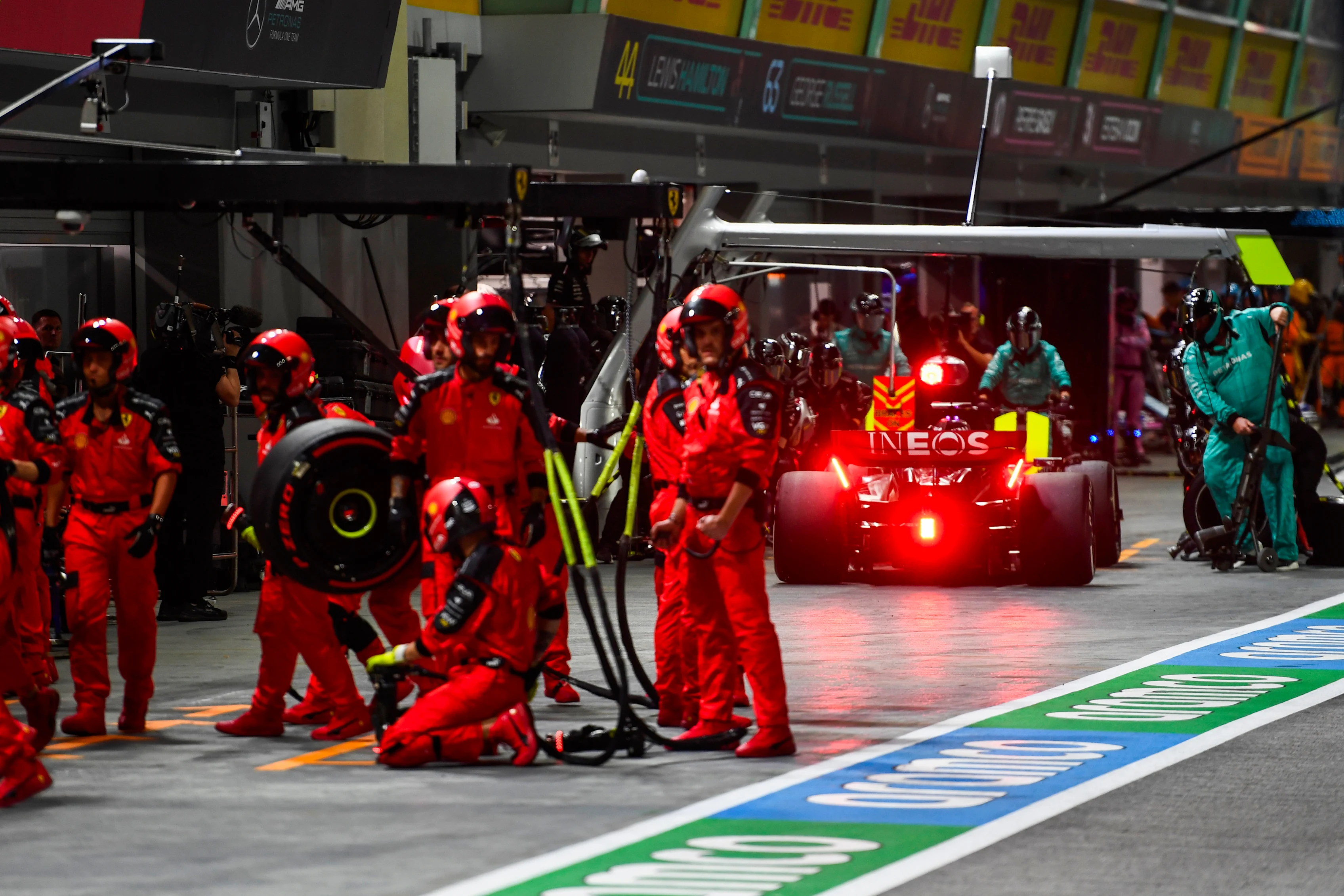
Having been second and fourth, the Silver Arrows dropped to fourth and fifth. George Russell, lead Merc, was 17 seconds behind the leader, and put the hammer down. His pace advantage was between 1.5-2.0s.
Leclerc was caught and passed on Lap 53, and Russell cruised up behind Norris, within DRS range on Lap 58. The McLaren driver had to get very wide to hold Russell at bay… but he had a little help.
Sainz had been holding position a second-and-a-half ahead of Norris through the second half of the race, but when Russell caught the leaders, the Spaniard allowed himself to drift back, just enough to ensure Norris had DRS, in effect turning the papaya car into his own tailgunner.
Russell could probably have picked-off both Norris and Sainz were they isolated… but with Norris having DRS, the McLaren could just about stay ahead – though it got very, very close on a couple of occasions.
Singapore held its breath; Norris held his ground. Sainz won, Norris was second, 0.812s behind and… Hamilton was third, 0.457s behind Norris. A fully committed Russell clipped a barrier and went into the wall within sight of the chequered flag. All in all a fabulous, fabulous Grand Prix.
The Strategic Masterstroke: Oscar Goes Long
It is difficult to pass in Singapore, but it isn’t Monaco. The straights, while not overburdened with length, are just about long enough that, given a suitable advantage, a brave driver can muscle his way through. The tricky bit is creating that advantage.
The sort of small pace differential that separates cars on the grid isn’t enough: what a driver needs is a strong tyre delta. Undercutting can work, but with Singapore being a presumed one-stop race, going long on the first stint and building a significant tyre delta into a shorter second, has often been more effective in Marina Bay.
Last year’s race saw two successful overtaking moves in the first stint, and 19 in the final 20 laps, when the difference in tyre ages could be worth a couple of seconds a lap. For a better example of this in action, however, it’s good to look at Oscar Piastri’s race in 2024.
McLaren’s renaissance began in 2023, and by mid-season 2024, they were once again a real powerhouse. Norris won the Singapore Grand Prix from pole, but a good strategy ensured Oscar Piastri, starting fifth, managed to join his team mate on the podium, coming home P3 after passing both Mercedes cars.
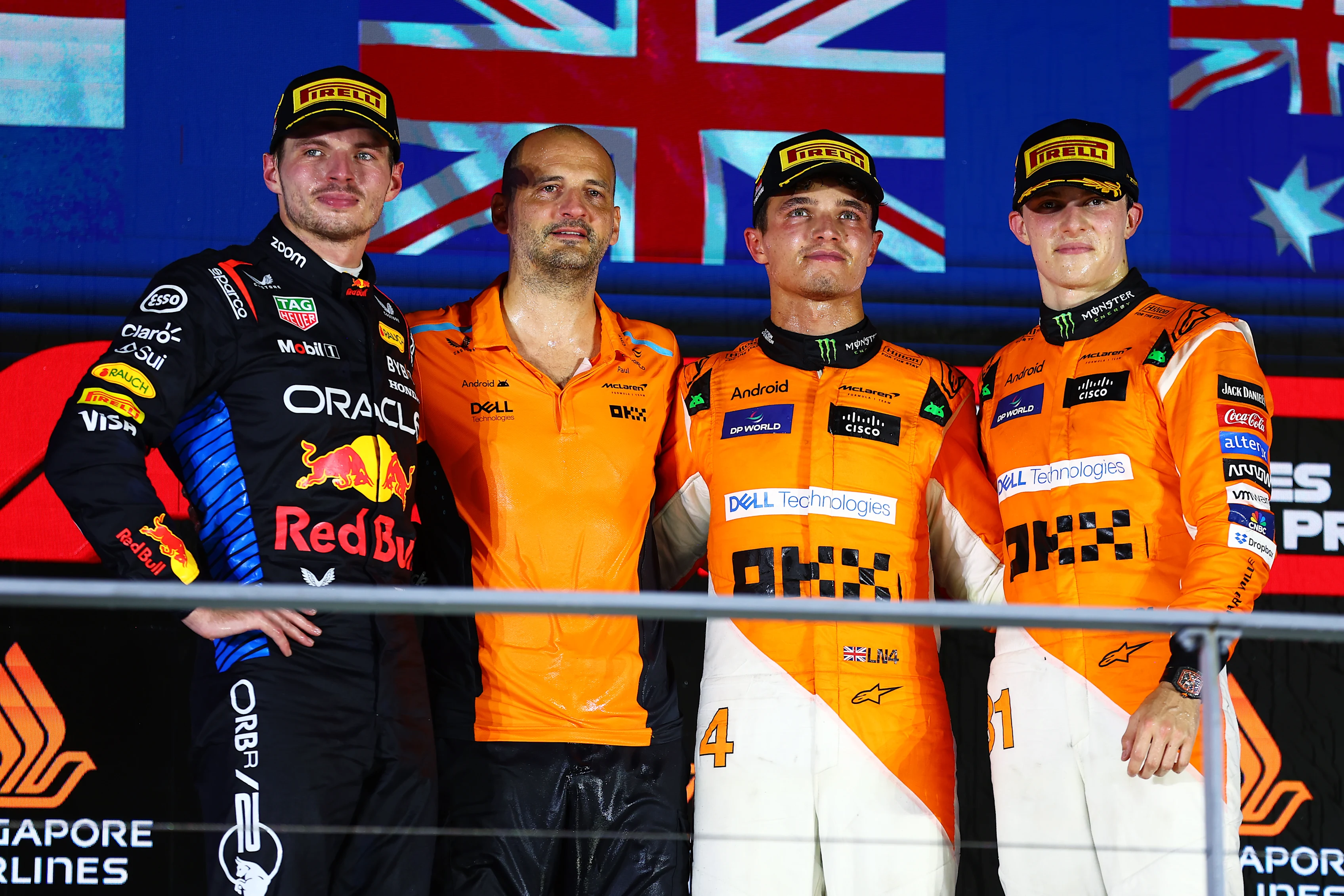
Piastri started the race on a medium tyre, while the Mercs ahead were split: Hamilton on soft; Russell on medium. Hamilton’s initial gamble on a soft tyre didn’t gain him any places. He stayed third, and pitted first, on Lap 17, for a hard tyre. Russell and Piastri kept going.
Piastri didn’t attack Russell, but stayed close enough to ensure Russell had to push a little harder than he would have liked. The second Mercedes pitted for hard on Lap 27. Had Piastri been ultra-quick at that stage, the normal response would have been to light the jets, put in a couple of very quick laps, and attempt to get out ahead after a pit stop.
Piastri didn’t do that. He kept lapping at a steady pace, losing ground to the Mercedes… but crucially not too much.
When he finally pitted, on Lap 38, he emerged on a hard tyre, a second behind Hamilton and seven behind Russell but with enough of a delta to pass – around 1.6s on Hamilton, and 1.3s on Russell. Hamilton succumbed on Lap 40, Russell on Lap 45. Textbook stuff.
The Sprint Weekend Conundrum
The best strategy for any race is to show-up with the fastest car. That’s marginally less facetious than it sounds this week in Singapore, because opportunities to experiment are limited by the Sprint format.
The nature of a street circuit, combined with a format allowing only a single practice session, builds a huge amount of risk into the standard methodology of setting up the car: on the Marina Bay Street Circuit, as with any street circuit, confident drivers push their braking points, get closer to the walls and go quicker – but that confidence stems from putting laps on the board.
The more time the car spends in the garage with its crew altering ride heights and stiffnesses, the fewer laps the driver can do… with the ultimate risk being that the session is interrupted by red flags (always a strong possibility on a street circuit) and the driver wastes too much green flag time in the garage, and barely gets any practice running.
It means that teams are more likely to go with their best estimate of set-up, and stick with it. It’s informed by simulation (of both the offline and driver-in-the-loop variety), but also by recent experiences – and luckily F1 has two street races in the previous three Grands Prix.
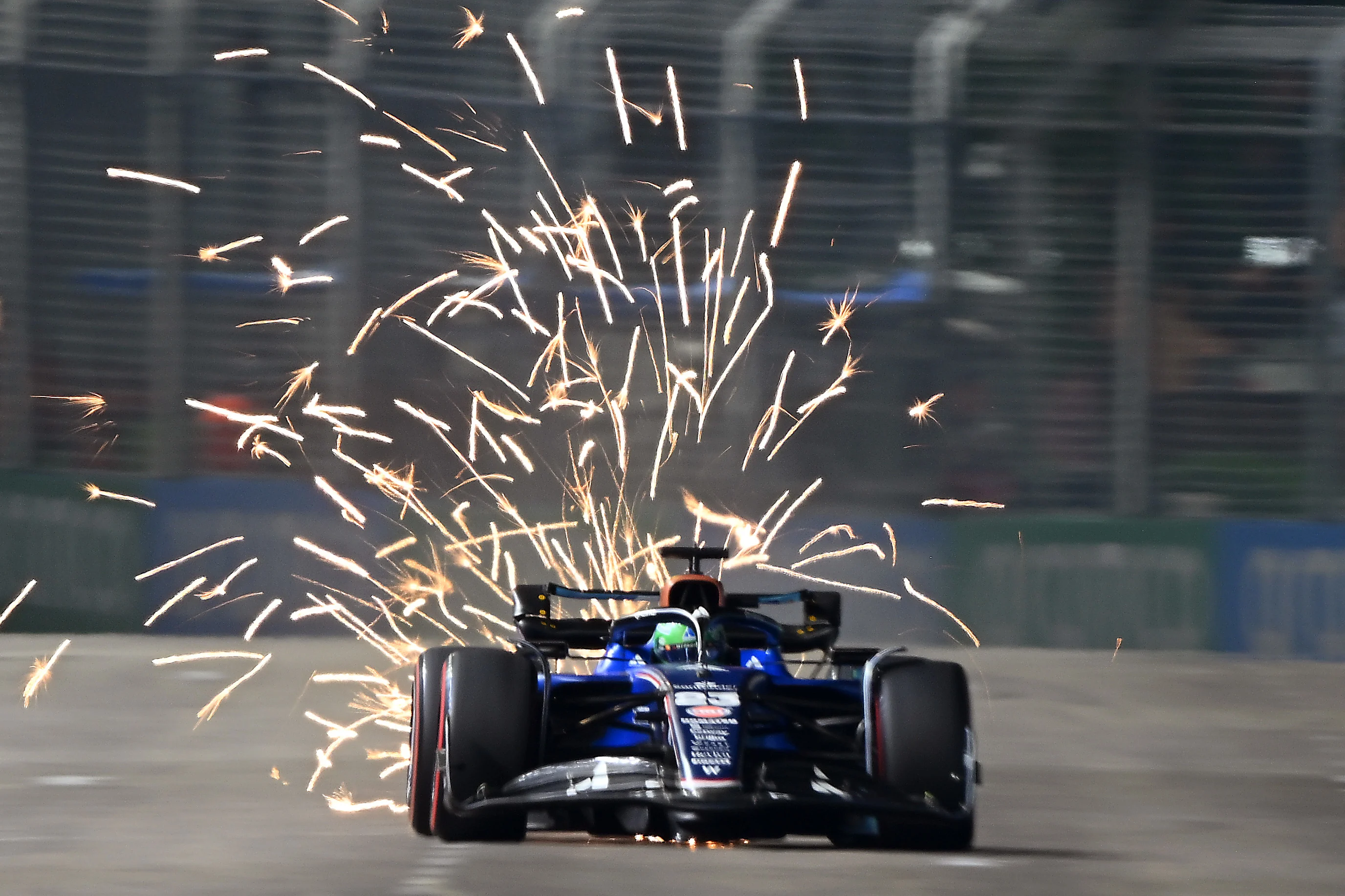
“We learned a lot in Madrid and Baku,” says Williams driver Alex Albon. “Combine those two circuits and you get something like Singapore.
“You learn a little bit of where you want the ride to be on the front and the rear; where you want to be on roll stiffness, where you want to be conceptually with the tools that you run on the track. You have to take these learning from previous parts of the year and start from there – but also be very open-minded to change.”
The Strategy for this year
Everything we know about 2026 cars suggests Singapore is the circuit that will produce a race most like we’ve seen in recent years – thus a one-stop race where track position is vital… but overtaking, while difficult, is possible. Where it may diverge from recent history, however, is in how the 2026 tyres behave, and how much potential the drivers have to overtake.
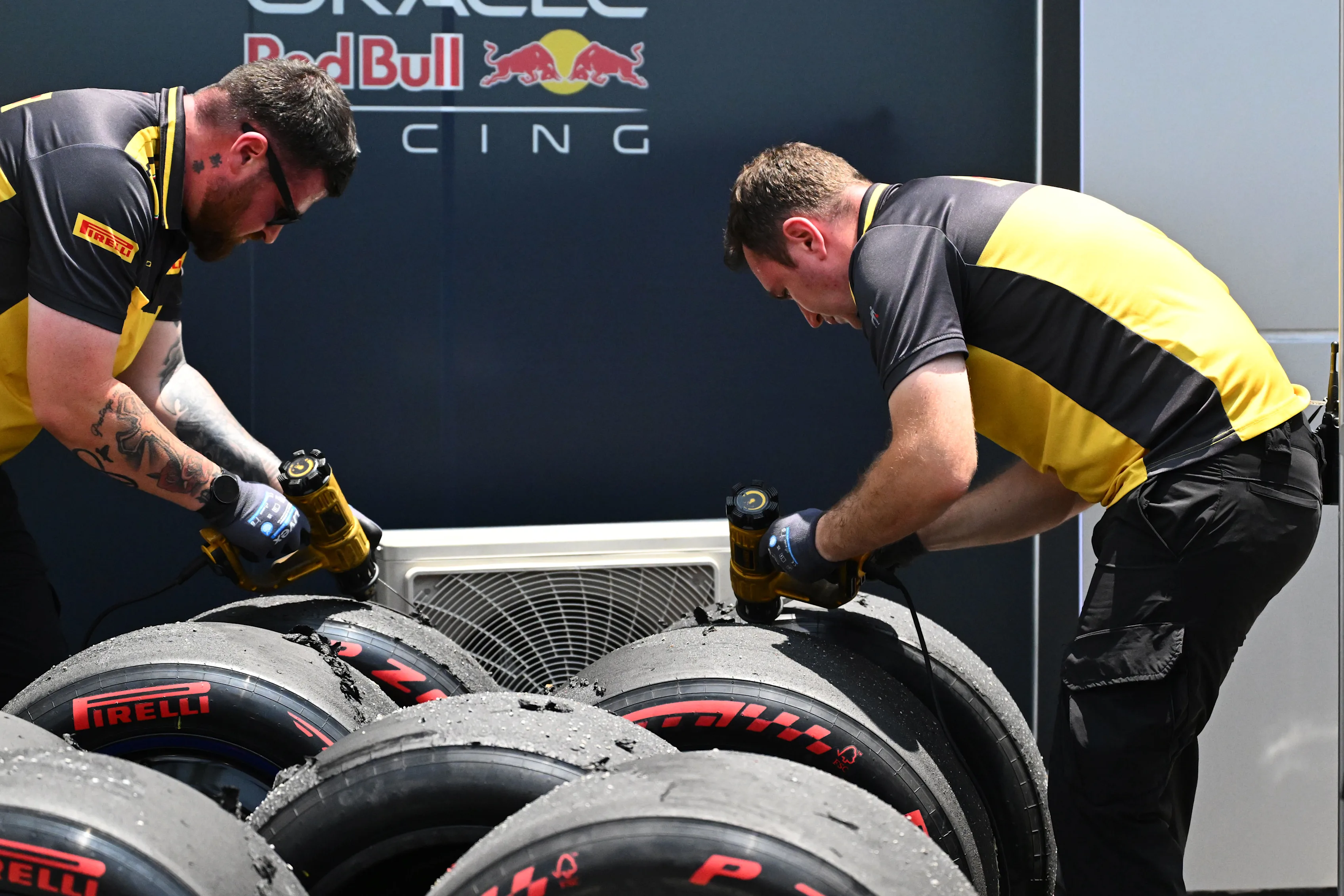
The 2026 tyres are more robust than we’ve seen recently. On the street circuits with which Singapore has the most in common, degradation has been very low, there hasn’t been any sign of graining, and thus the traditional tools of undercut and tyre delta have, perhaps, less potency.
This does not, however, suggest a processional Grand Prix, because Marina Bay has potential to be the circuit where Overtake Mode, and the extra half-megajoule of deployment and recovery are most effective.
At some circuits, it’s very difficult to harvest the extra energy, and thus that limits where attacks will take place, whereas in Singapore, in the words of Dave Greenwood: “I think you’ll find you get the Overtake Mode and very quickly you’ll find a way to have that extra energy to deploy, and be quite aggressive, quite early on, and not worry that you’ve used too much energy at the start of the lap.
“Cars will maybe get the Overtake Mode, and try to attack almost straight away, [on the straight] into Turn 7.”
If teams believe they can overtake on track, without first developing an overwhelming pace advantage, then we’ll see a new sort of Singapore Grand Prix… but it does require a leap of faith from the teams and drivers – and that, in itself, is inherently risky.
The Risk Perspective is brought to you in association with Marsh, Formula 1’s Official Risk Partner and Official Insurance Brokering Partner.

Next Up
Related Articles
 What time is the 2026 Singapore GP and how can I watch it?
 5 storylines we're excited about ahead of the Singapore GP
 All the key moments from the 2026 Bahrain GP in Malaysia
/GettyImages-2298520804.webp) Mekies on why Verstappen’s victory meant so much to Red Bull
Mekies on why Verstappen’s victory meant so much to Red Bull/GettyImages-2298359584.webp) Piastri admits McLaren ‘need to improve’ after Malaysia P6
Piastri admits McLaren ‘need to improve’ after Malaysia P6 Vasseur on how Hamilton and Leclerc saved the day at Sepang